
Tiling Tests 003, Watermelon Vine Progress

Don’t forget to check out my Tiling Surface Design in Inkscape tutorial.

VinoDeco_v151.svg
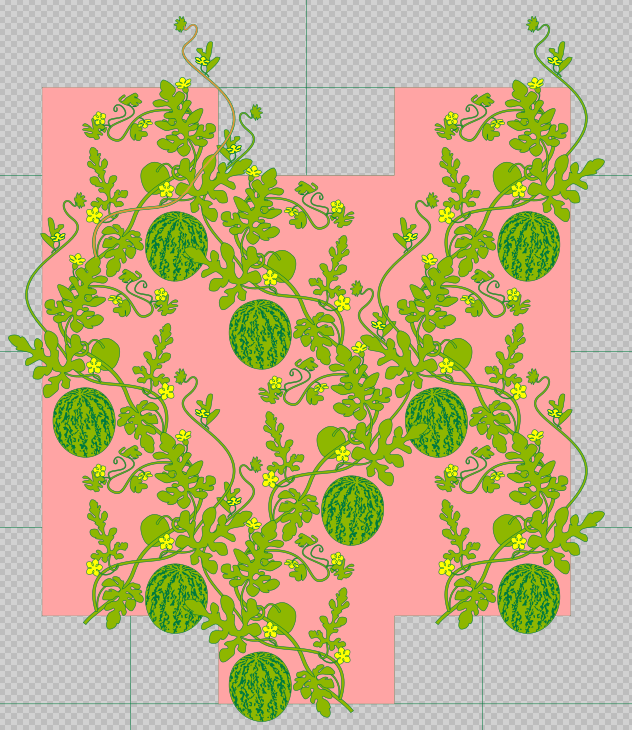
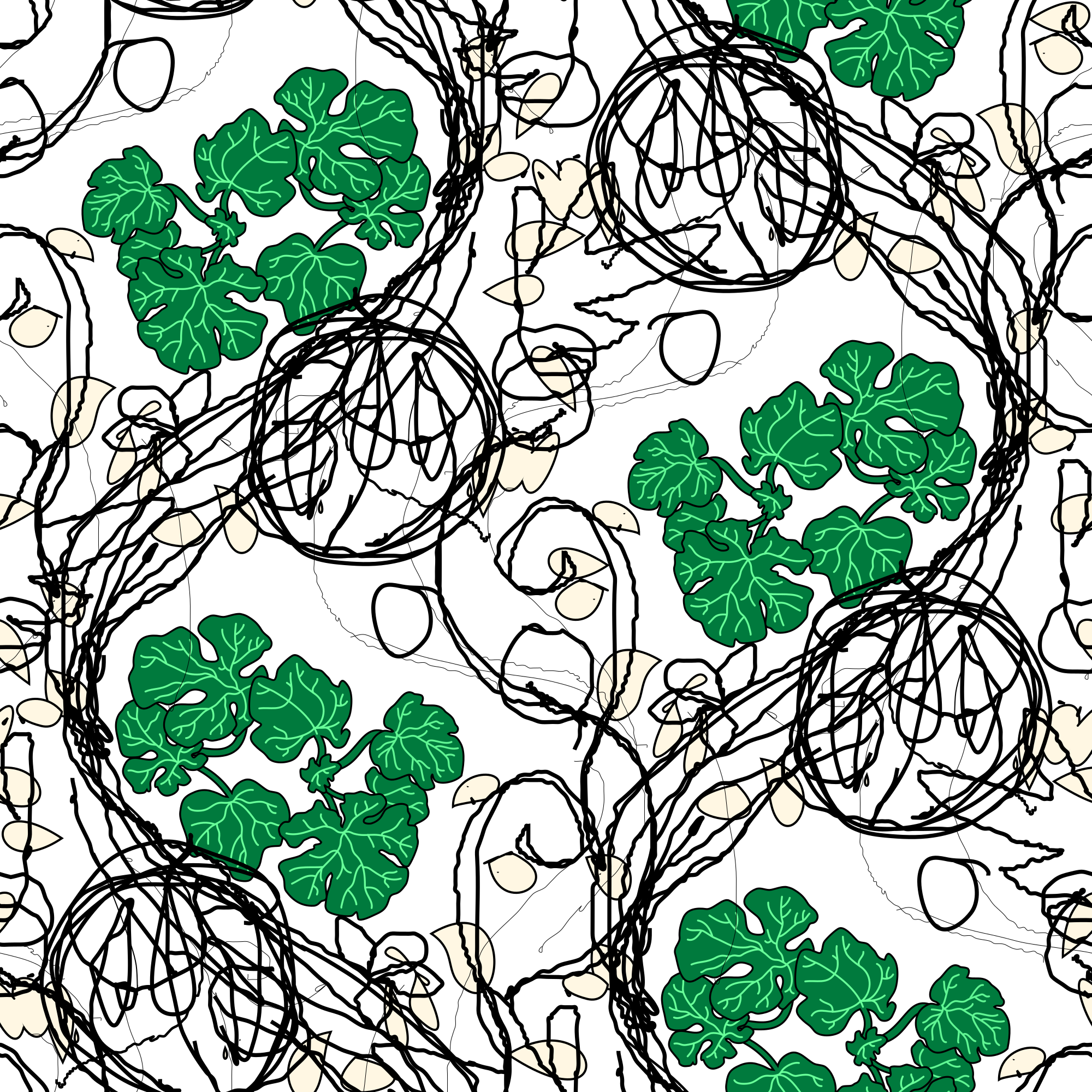
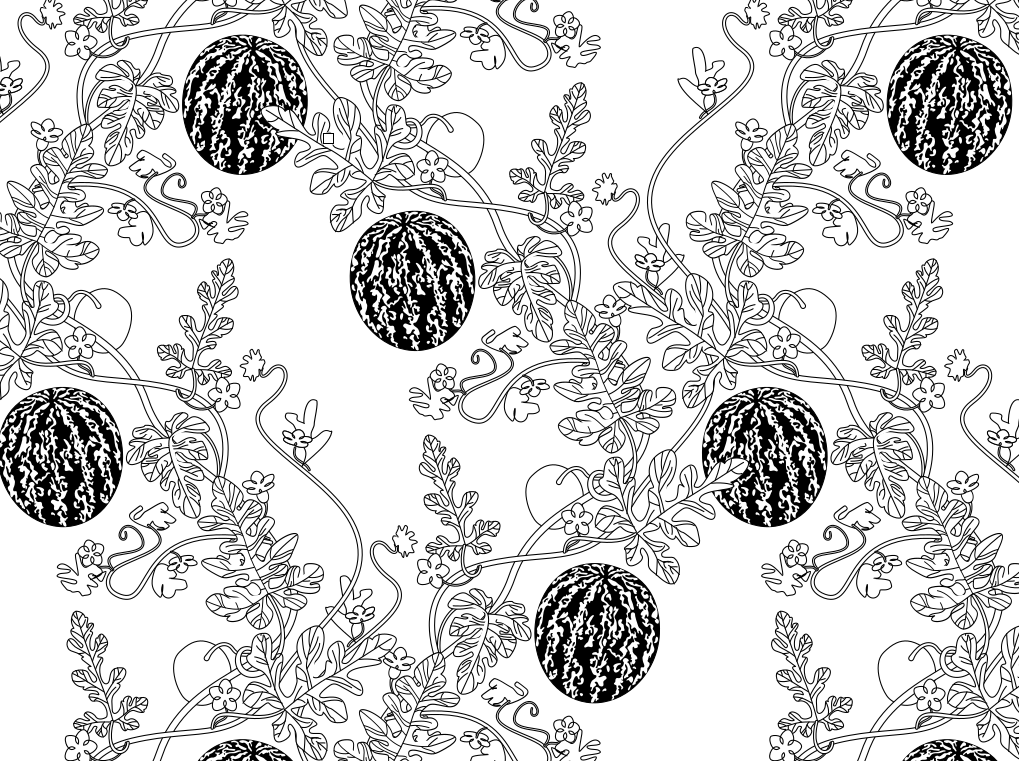
Here’s the working SVG file as of right now. I’m often impressed that, at least from my vantage point here on desktop Firefox, the web rendering of these does all the path effect behavior from Inkscape like Tiling and Power Stroke, even without specifying an older, more web-compliant variant of SVG. They really do mean that they are SVG compliant. This does seem to entail pushing the SVG standards directly.

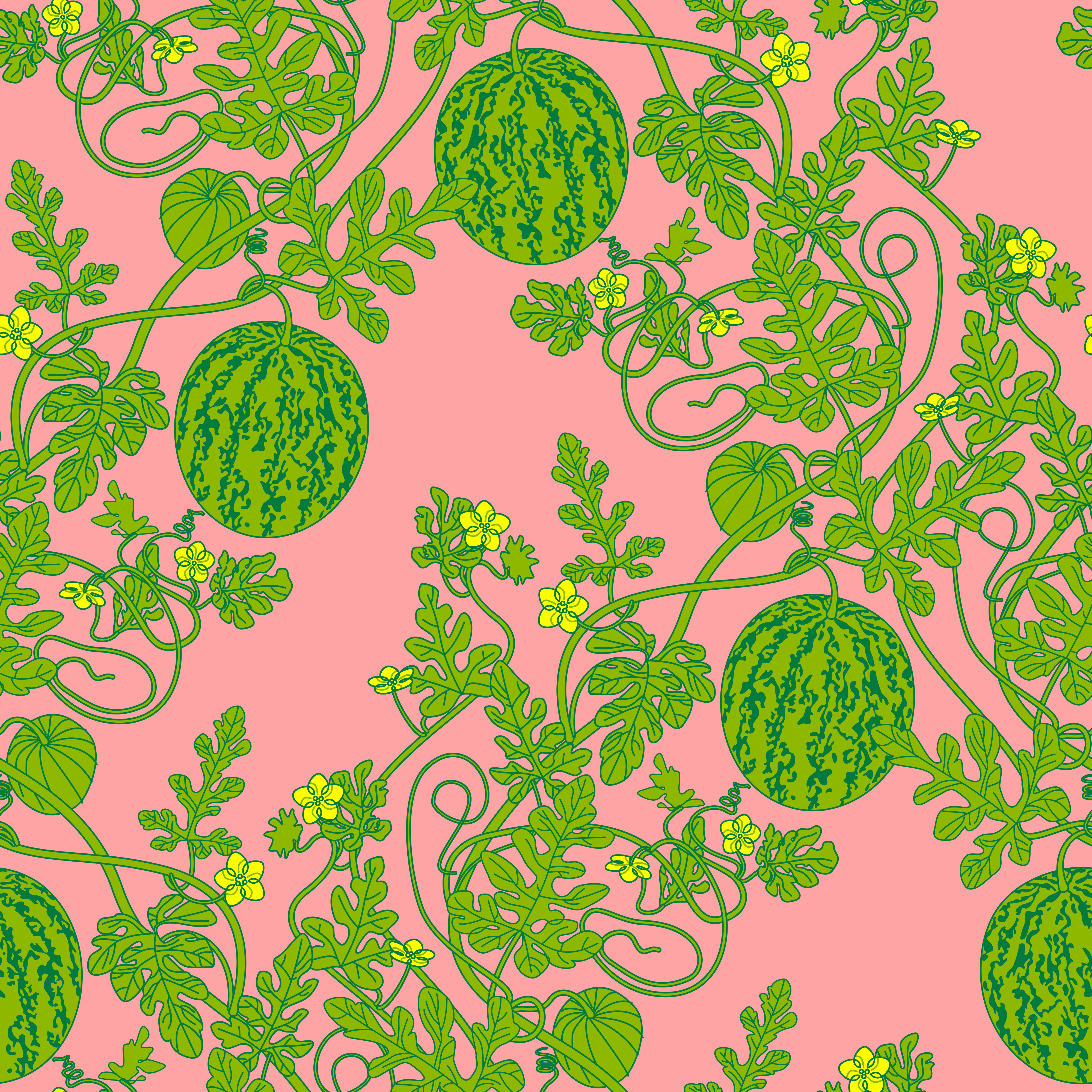
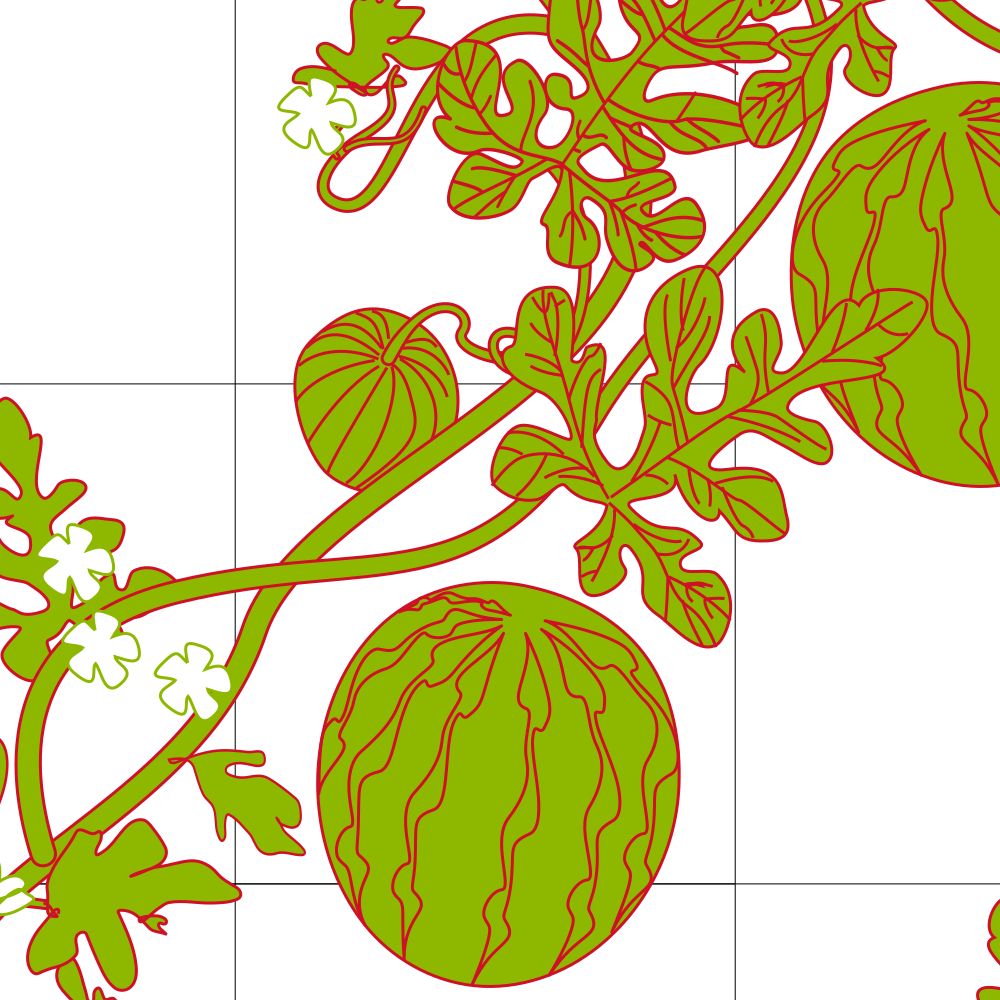
Using Inkscape’s Shape Builder tool in a hyper-specific way to get the overlapping shapes occluded just so is really quite fussy and destructive. The outlined version of this is hitting that and visual barriers as the fine tendril elements get smaller, I’m going to have to find a different solution in the design language or go with flat colors. It’s not a terrible look but I like the line design as well. I’ll definitely revisit this later, line and vine widths in particular.
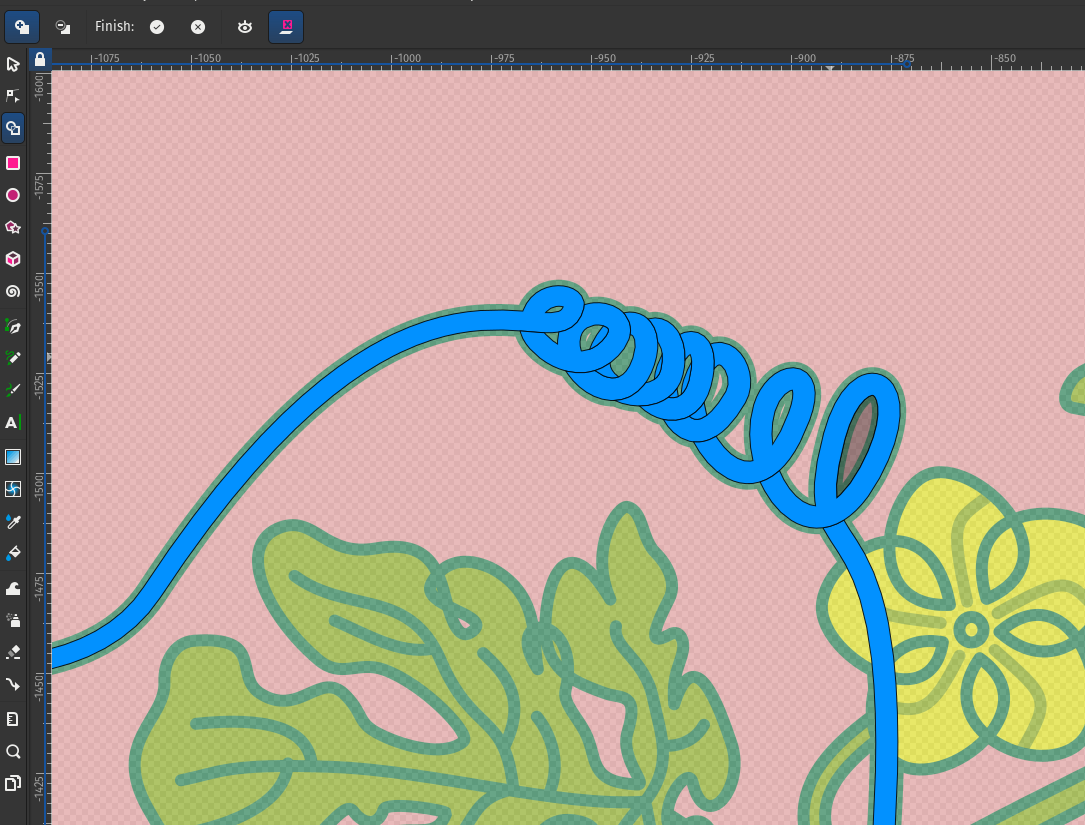

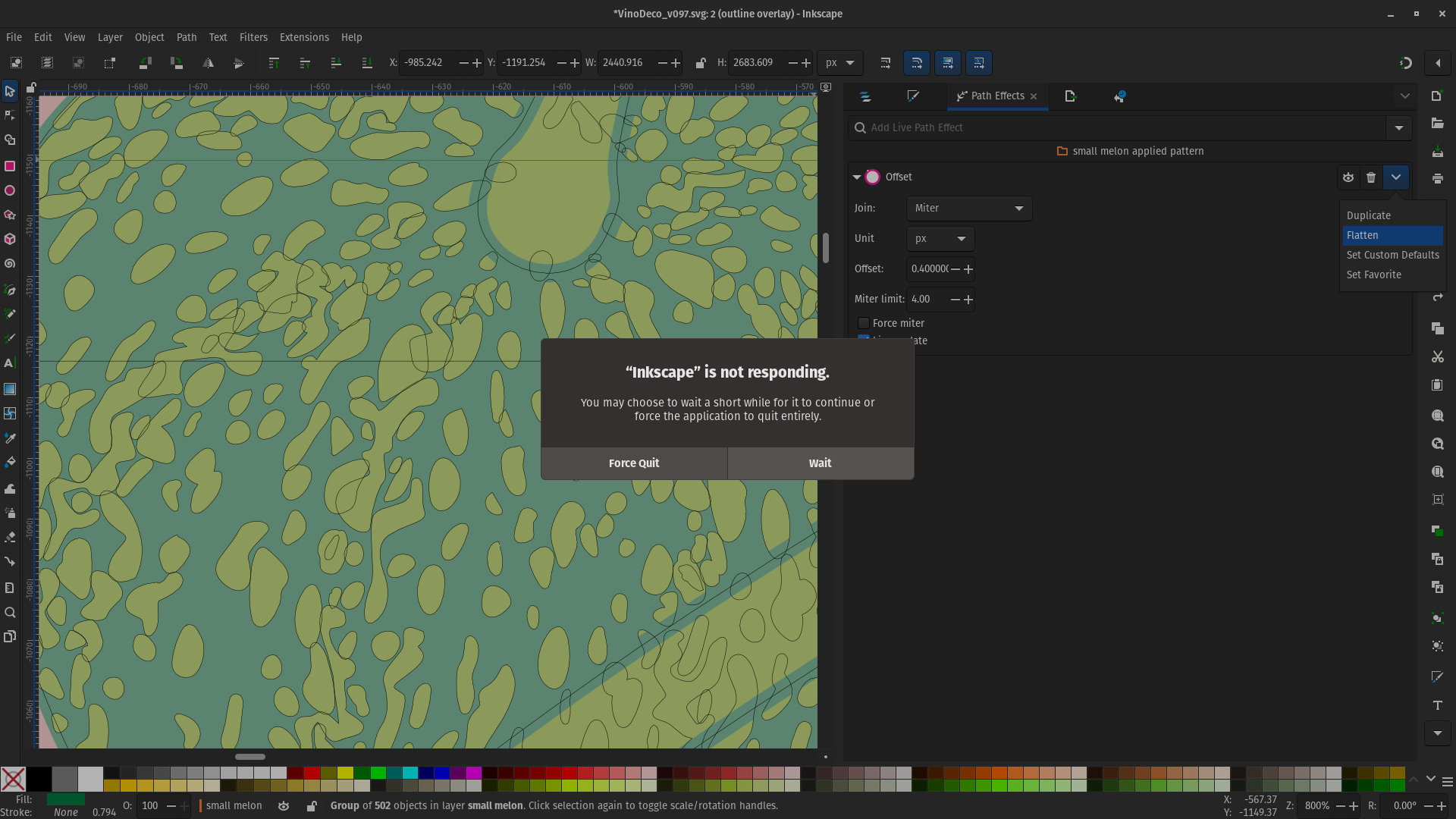
1) Inkscape does not like Undo operations to massive layer reorganizations. Just move them back manually, it’s not worth the app bogging and whole system freezing eventually. Some operations you just gotta wait out, but there are little strategies here and there to avoid behaviors that upset it or cause weird glitches.

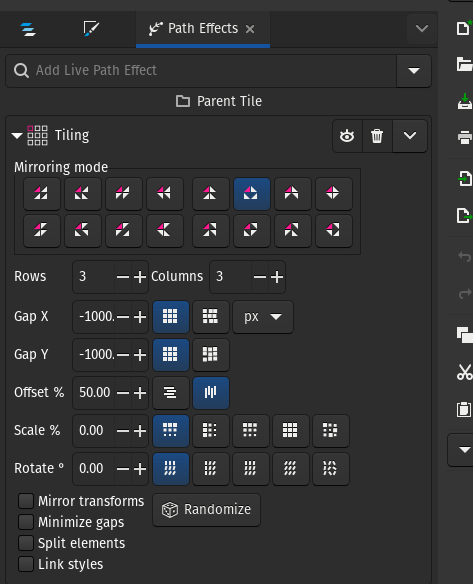
2) Deleting the Tiling Path Effect (not hiding just deleting) seems to be the most helpful during certain operations.

3) Under Edit > Preferences > Rendering, up the number of threads! If you watch the system monitor you’ll see that some / most tasks stubbornly ping only one core / thread at a time but it does help keep operations plugging along a bit more gracefully.

Tiling Tests 002

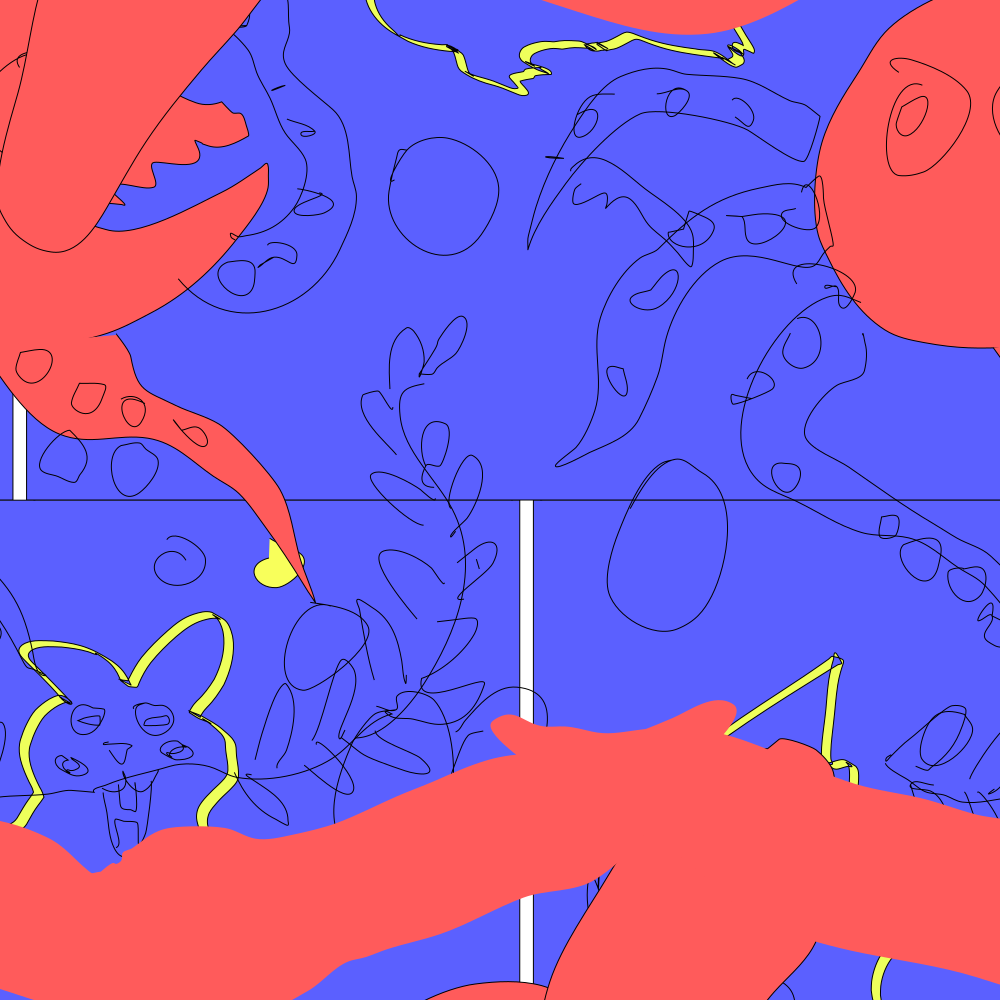
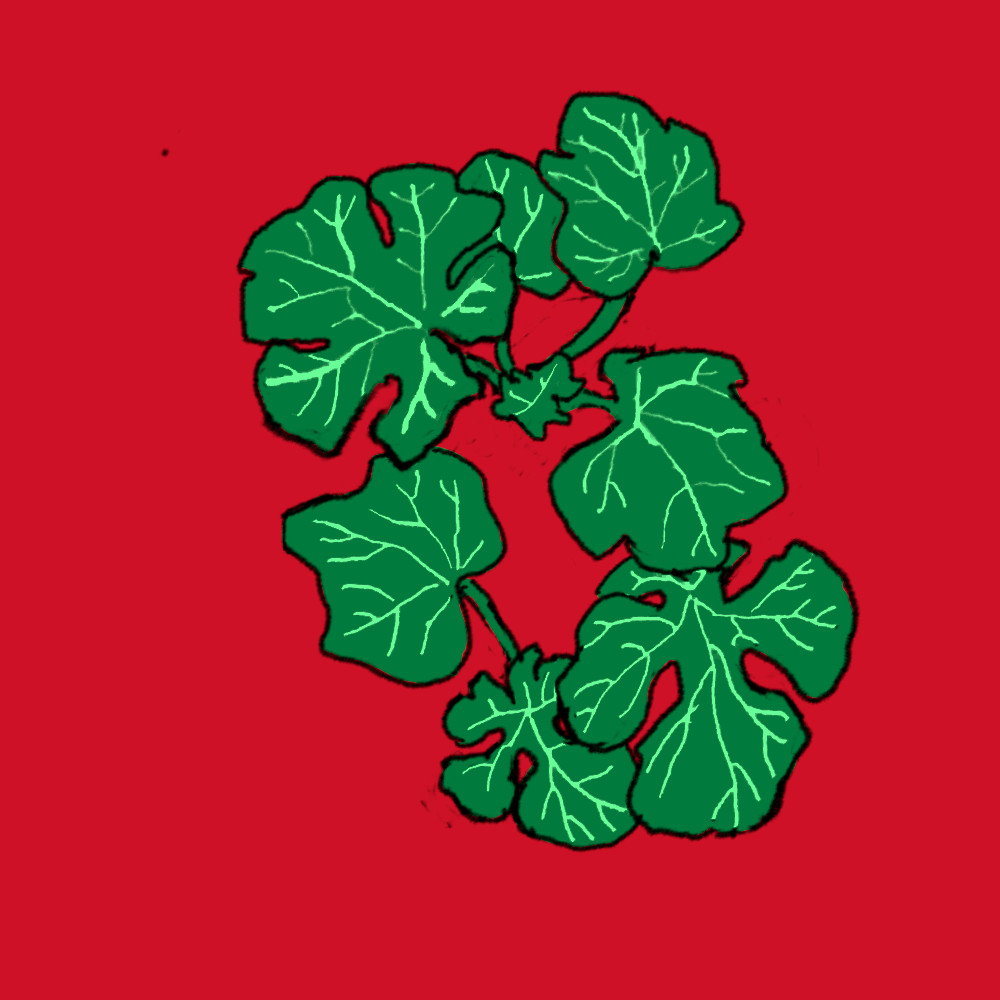
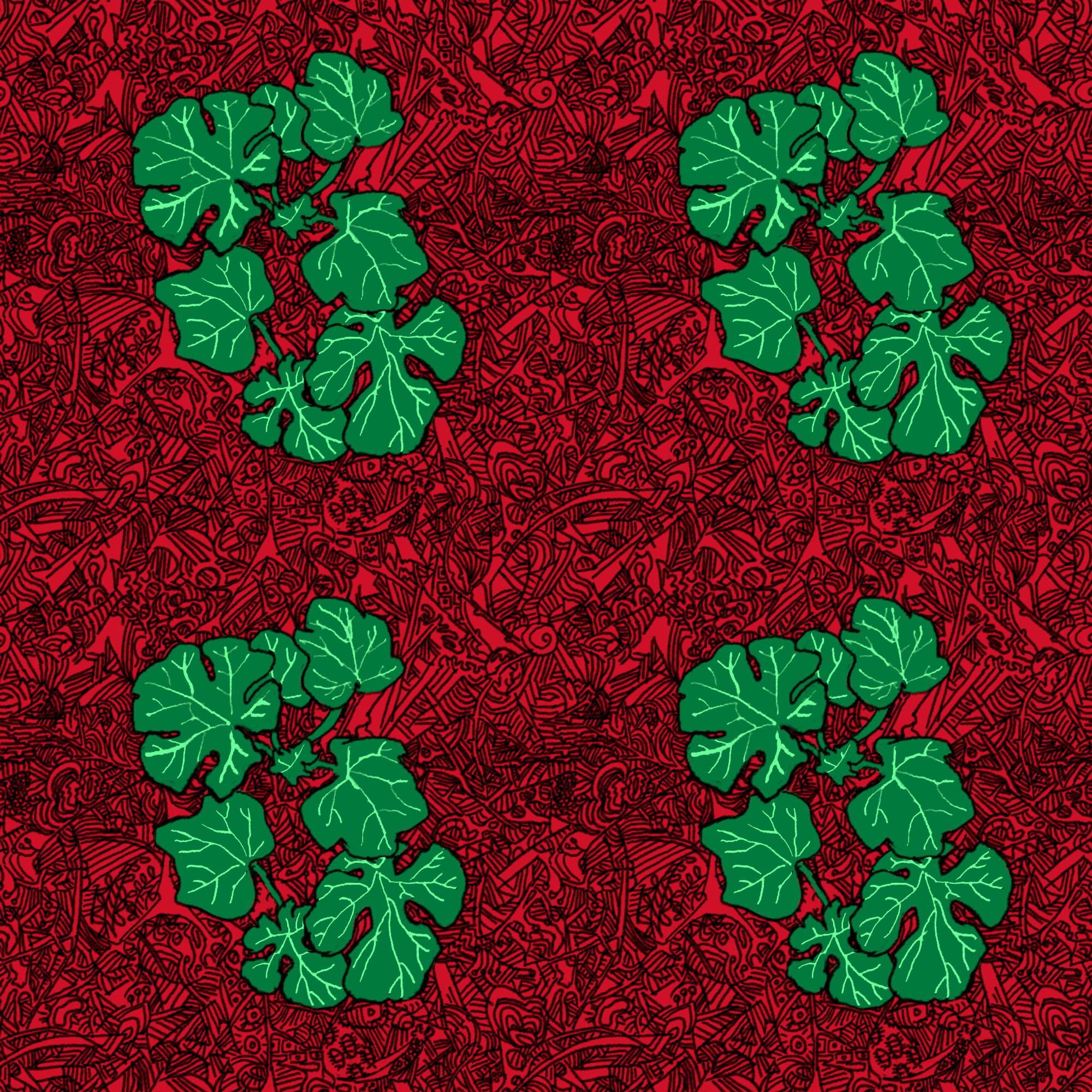
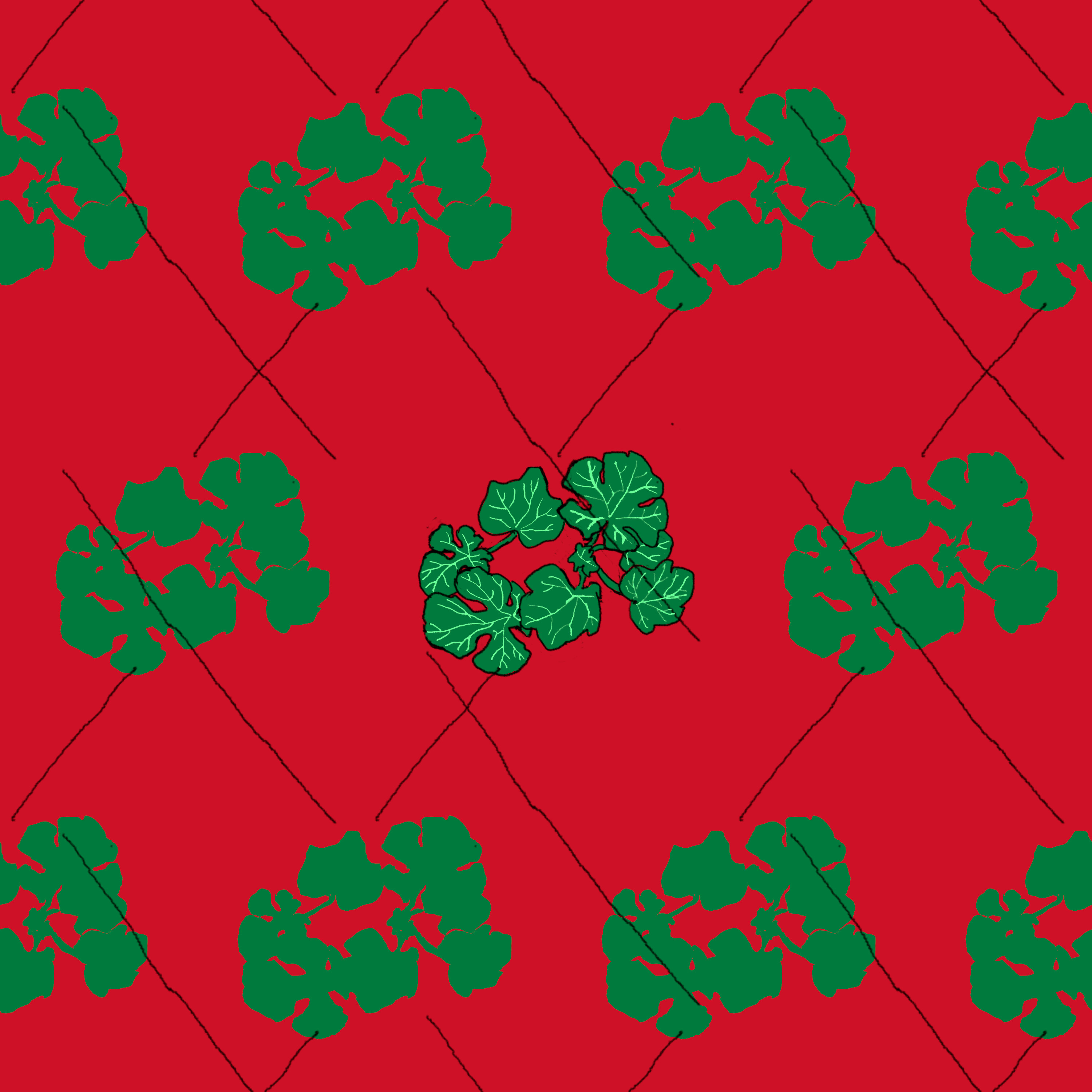
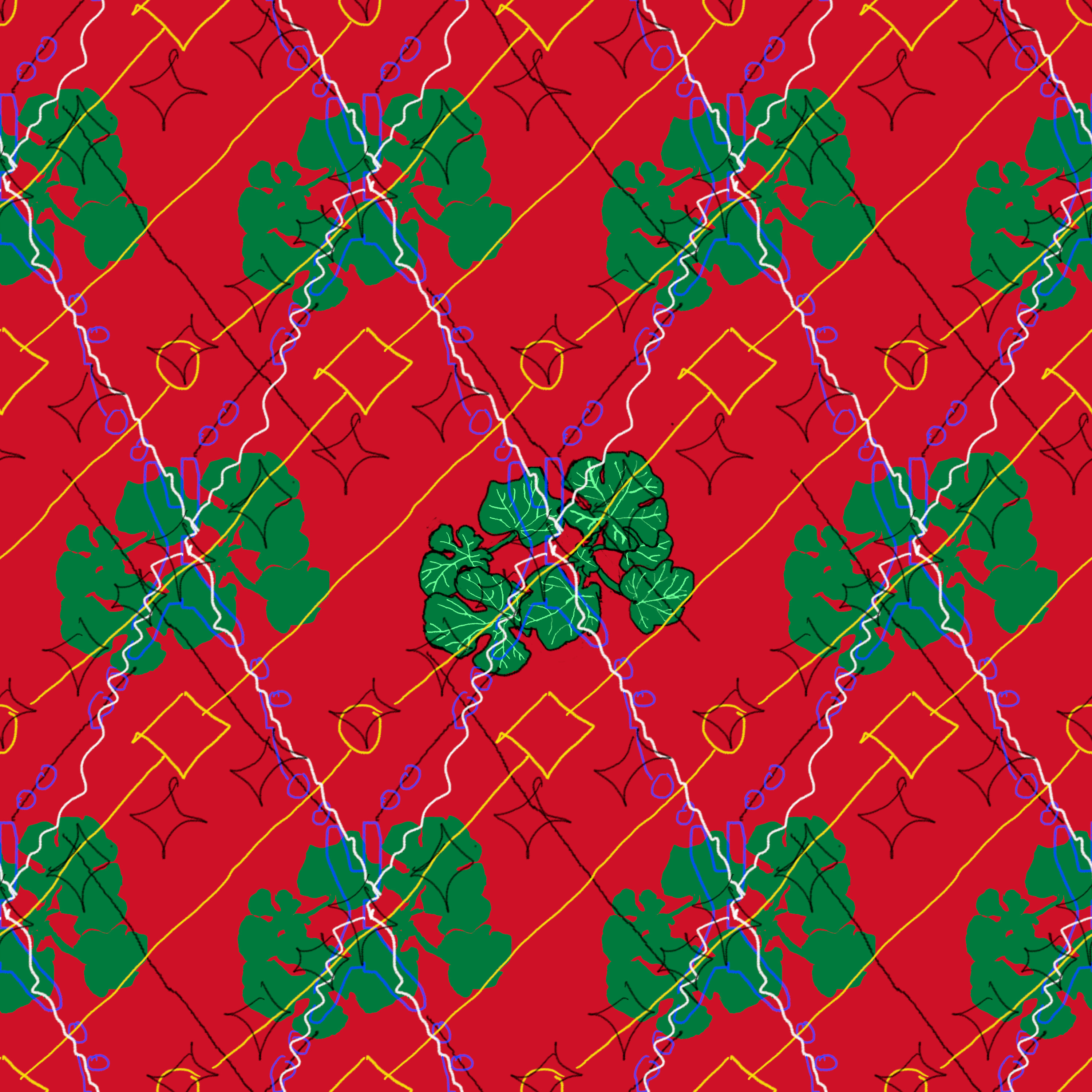
Some doodles and early tiling technical exercises to figure out the software behavior, this culminates in later refinements of this watermelon vine pattern as well as the tutorial I have published on tiling / Surface Design in Inkscape which if I recall features some notes on GIMP and Krita as well. Generally, any of these tiles can be previewed in GIMP, checking for errors and continuity, using the Offset tool dialogue at Layers > Transform > Offset. This works on one flattened layer at a time.

Early Tiling Tests 001, A Menagerie of Horrors

Been dipping into tutorials for tiling surface pattern design.

GIMP

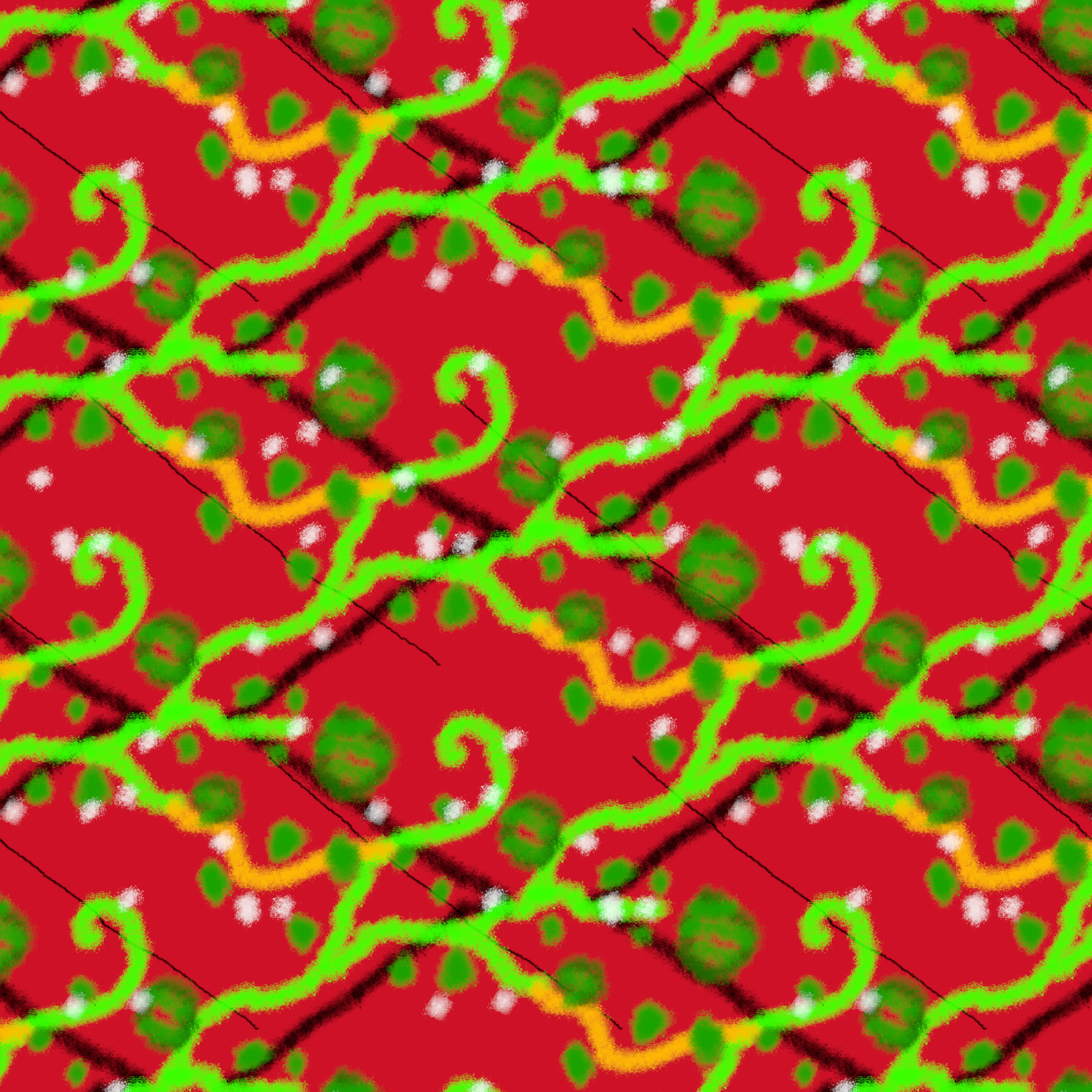
I decided to spend time in GIMP first, testing the Layer Transform Offset and the Symmetry Painting tools under various settings to see what sort of geometries worked and didn’t work. They all only apply to one layer. Symmetry Painting is lovely for brush strokes but there’s no direct automation for arraying existing elements besides a basic square tiling filter. One can however use the Layer Transform offset for selections. Symmetry Painting only does offsets for the x axis, so some designs would need drawn rotated sideways first.

The total image needs sized so that every periodicity of elements lines up for one square tile. Cropping down works but scaling the canvas up after the fact doesn’t work with the way the Symmetry Painting does strokes. One can plan for different elements to converge in different planes, and one would want to plan all the separate periodicities to align within the images unified tile.

Krita

Krita does have basic wraparound square tiling with no variable offset painting for the entire image rather than just layer by layer, and displays an extended infinite canvas to visualize this. There is no offset There is no specifying smaller sub-image intervals. In addition to a layer offset transform, there is also an image offset transform that operates on all layers, which is nice.

Inkscape and Blender are up next in my tiling tests.